




My team was putting together a routine monthly report for a real-estate developer we work with. One number we needed was simple: how many units have been booked?
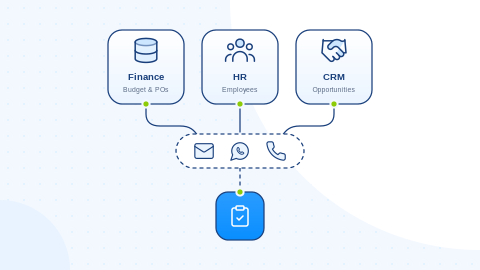
There were three answers. Sales counted a booking when the form was signed. Collections counted it when the first demand went out. Finance counted it when the money was accounted for. Each view had been set up around the moment that mattered to that team, and each was right on its own terms.
The question was which one leadership should see. Until then, nobody had needed to decide, because nobody had put the three side by side.
After years in delivery, I’m convinced of this: software only helps once a business can see its own process end to end, as it actually runs. Implementation teams often see it before anyone else. That’s not because we know the business better. It’s because of where we sit, following one record through every team that touches it.
What drifts
Leaders know their business: the strategy, the customers, the numbers. What drifts is the day-to-day. A check added after a bad month. A spreadsheet built to survive a busy quarter. A definition that slowly means something slightly different in each department. None of it is big enough to reach a leadership meeting, but together it creates a business that runs differently from how it’s described.
The booking count is a small example of a big pattern. When one number means three things, any system you bring in will either copy the confusion or make you decide what it should mean. The second is better, but only if you decide on purpose.
Start with the people, not the meeting room
That’s why, with every new customer, I tell my team:
“Let’s not define the process while sitting in a meeting room. Let’s talk to the people who actually run it, understand what happens at every touchpoint, and see where reality differs from what’s documented. That’s where the real gaps and user pain points show up, and that’s where we can make a meaningful difference.”
At Workhall, before we build anything, we map how the business really runs. That’s what lets us go live fast and stay live.
Try this on Monday
Pick one number your business reports every month and ask two teams how they calculate it. If the answers differ, you’ve found your first gap.
Find the gap first
Three honest answers to one question isn’t a failure. But if leadership doesn’t know which answer it’s looking at, decisions get made on the wrong number.
Find the gap first. Then build.